Double Fine's crowdfunding gambit for Psychonauts 2 redefined AAA five years on
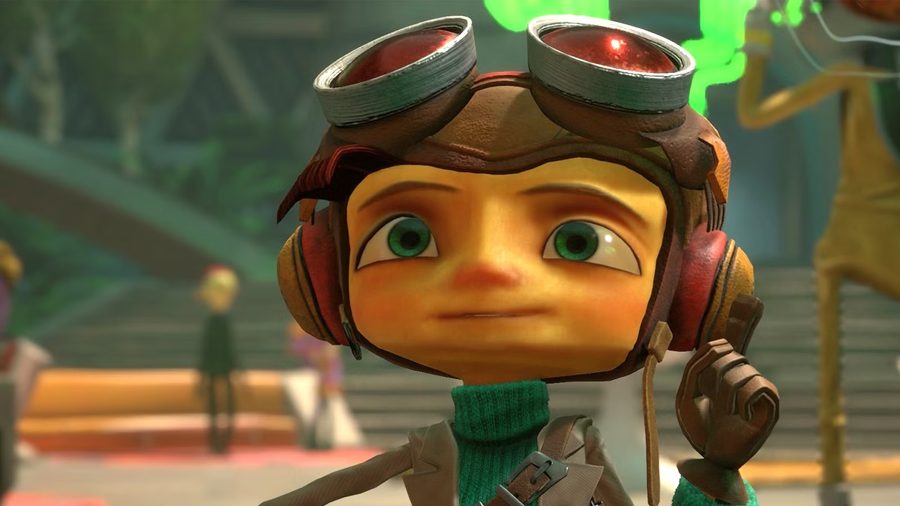
Five years after its release, Psychonauts 2 stands as a curious milestone in the history of big-budget game development. The game, launched in August 2021, was the culmination of an audacious experiment by developer Double Fine Productions to crowdfund a sequel to its cult-classic 2005 platformer, while simultaneously securing a publishing deal with a major label. The result was a project that attempted to square the circle of creative independence and financial security, and its legacy continues to inform how studios think about funding and risk.
The story of Psychonauts 2's creation begins in 2015, when Double Fine launched a Fig crowdfunding campaign. The studio, led by industry veteran Tim Schafer, had spent the previous decade making smaller, quirky titles after the original Psychonauts failed to find a large audience despite critical acclaim. The campaign was a gamble: the team asked fans to fund a sequel that would cost millions, promising a return to the surreal, mind-bending platforming that had defined the first game. The pitch was that player investment would allow Double Fine to retain full creative control, free from the constraints of a traditional publisher.
The campaign raised over $3.3 million, a substantial sum for a crowdfunded game at the time, but still far short of what a modern AAA title demanded. That gap was filled by an unexpected partner: Microsoft. In 2019, Microsoft acquired Double Fine, bringing the studio under the Xbox Game Studios umbrella. The deal meant Psychonauts 2 would receive the full financial backing of a major platform holder, but it also raised questions about the crowdfunding experiment's original promise. Backers had funded a game that was now being bankrolled by a corporation, and the tension between the two funding models became a talking point throughout the game's development.
When Psychonauts 2 finally shipped in August 2021, it was met with near-universal praise. Critics lauded its inventive level design, emotional storytelling, and the sheer personality that had always been Double Fine's hallmark. The game was a technical and artistic achievement, proving that a mid-sized studio could deliver a polished, ambitious title without sacrificing its identity. Yet the financial reality behind that success was more complicated. The crowdfunding had provided a proof of concept and a passionate community, but it was Microsoft's resources that allowed the game to reach its full scope.
The experiment's implications for the wider industry are still being debated. On one hand, Psychonauts 2 demonstrated that crowdfunding could be a viable tool for de-risking a project and building an audience before a publisher steps in. On the other, it highlighted the limits of that model: even a highly successful campaign could not cover the full cost of a modern AAA game. The game's budget was estimated at tens of millions of dollars, and the crowdfunding contributed only a fraction of that total. The lesson for developers was that crowdfunding alone was rarely enough to fund a large-scale project, but it could serve as a powerful signal to potential investors.
The game's legacy also extends to the studios that have followed Double Fine's path. Several developers have since used crowdfunding to gauge interest in a sequel or a niche title, then leveraged that support to secure a traditional publishing deal. The approach has become a recognisable pattern in the industry, though it remains a high-risk strategy. For every Psychonauts 2, there are projects that fail to deliver on their promises, leaving backers with nothing but a refund or a cancelled game.
For Double Fine itself, the Psychonauts 2 project was a success that validated its creative approach. The studio has continued to operate under Microsoft, releasing smaller titles and working on new projects. The game's fifth anniversary is a reminder of how rare it is for a developer to maintain its artistic voice while scaling up to a AAA budget. The crowdfunding experiment may not have rewritten the rules of game financing, but it showed that a different path was possible, even if it required a corporate safety net to reach the finish line.
As the industry continues to grapple with rising development costs and the consolidation of publishers, the Psychonauts 2 story remains a touchstone. It is a case study in how to balance ambition with pragmatism, and a testament to the enduring appeal of a game that was built on a foundation of both fan support and corporate investment. Five years on, the game's success is a reminder that the best outcomes often come from the most unlikely partnerships.