Nightdive's Thief remaster uncovers a 'very out of date' code repository full of developer curses
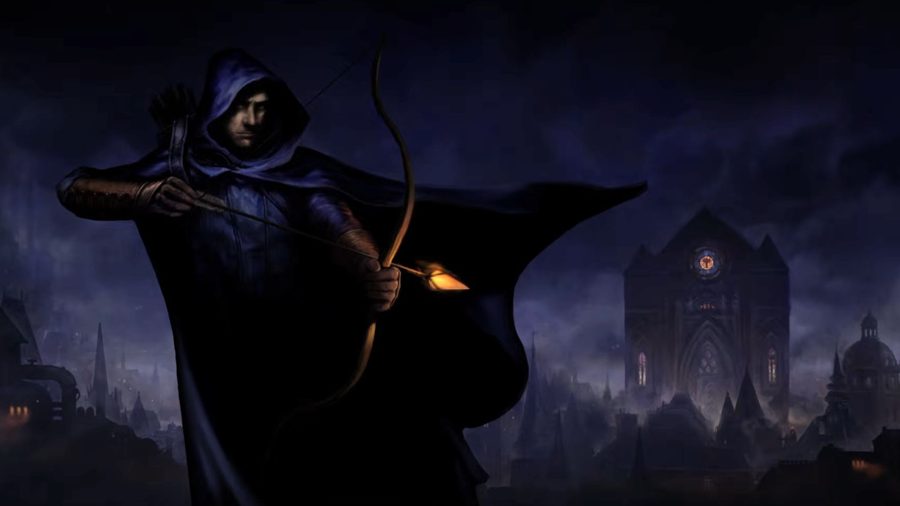
Nightdive Studios’ ongoing remaster of Thief: The Dark Project has given its engineers a rare look at the game’s original source code, revealing a chaotic development history and a set of brutally honest comments left by the original programmers. The project, which aims to bring Looking Glass Studios’ 1998 stealth classic to modern platforms, has unearthed what senior software engineer Josh Dowell describes as “a very very out of date version control repository” for the Dark Engine that powers the game.
Speaking to Digital Foundry’s Retro Super Show, Dowell explained that the codebase contains a series of colourful remarks left by the original developers at Looking Glass Studios and Irrational Games. “They have the wildest things to say about the code,” he said. “They say, ‘Giant hack! Never replicate this! We must fix this before ’98!’ ‘E3 hack! We must delete this after E3!’ – and it’s still there in Thief 2.” The comments suggest that the game was rushed to meet its 1998 release after an initial delay from a planned 1997 launch, and that many of the workarounds intended as temporary fixes were never removed.
The Dark Engine’s quirks
Dowell’s analysis of the code also sheds light on why the Dark Engine behaves in such distinctive ways. He noted that the engine appears to have been built by two separate teams: “I think most of the team that started working on it ended up moving to different projects and then a whole new team took over for the second half of its development.” This handover may explain some of the inconsistencies and oddities that players have observed in the original games.
Despite its messy origins, the Dark Engine remains capable of impressive feats, particularly in audio, artificial intelligence, and lighting. Dowell pointed out that Thief’s rendering technology is remarkably similar to that of Quake, id Software’s 1996 first-person shooter. “The way they do the lighting is exactly the same as Quake, the way that lights are turned on and off is Quake,” he said. He called the two engines “eerily similar,” though he noted that the differences between them are “really strange.” For instance, Quake uses precomputed visibility to determine what a player can see from any given position, while the Dark Engine performs a similar calculation during its own precomputing phase, treating every doorway as a portal and calculating the visible rectangle through it.
What the remaster means for players
Nightdive’s remaster of Thief: The Dark Project is part of the studio’s ongoing effort to preserve classic games by updating them for modern hardware and operating systems. The company has previously remastered System Shock, Doom 64, and Quake, among others, and its work on Thief is expected to include improved controls, higher resolutions, and compatibility fixes that eliminate the need for third-party patches or configuration tweaks.
For long-time fans, the remaster also offers a rare opportunity to learn more about the game’s development. The discovery of the old version control repository, with its unvarnished programmer comments, provides a window into the pressures and compromises that shaped one of the most influential stealth games ever made. As Dowell put it, “There’s nothing else like it even to this day.”
The remaster is yet to receive a confirmed release date, but Nightdive has indicated that it will be available on PC and current-generation consoles. The studio’s track record suggests that the final product will preserve the original game’s atmosphere and mechanics while making it accessible to a new audience.
A legacy of innovation
Thief: The Dark Project is widely regarded as a landmark title in the stealth genre, introducing mechanics such as light and sound gauges, rope arrows, and a focus on player choice over direct combat. Its influence can be seen in later games such as Dishonored, Deus Ex, and the Thief reboot released in 2014. The Dark Engine itself was also used for Thief II: The Metal Age and System Shock 2, both of which are considered classics in their own right.
By digging through the code and sharing what he found, Dowell has given the gaming community a vivid reminder that even the most polished-feeling classics were often built on hurried work and late-night fixes. The comments left by the original developers – “We must fix this before ’98!” – now read as a time capsule of a team racing to finish a game that would go on to define a genre.