Onimusha: Way of the Sword review – a thrilling samurai return that sometimes overstays its welcome
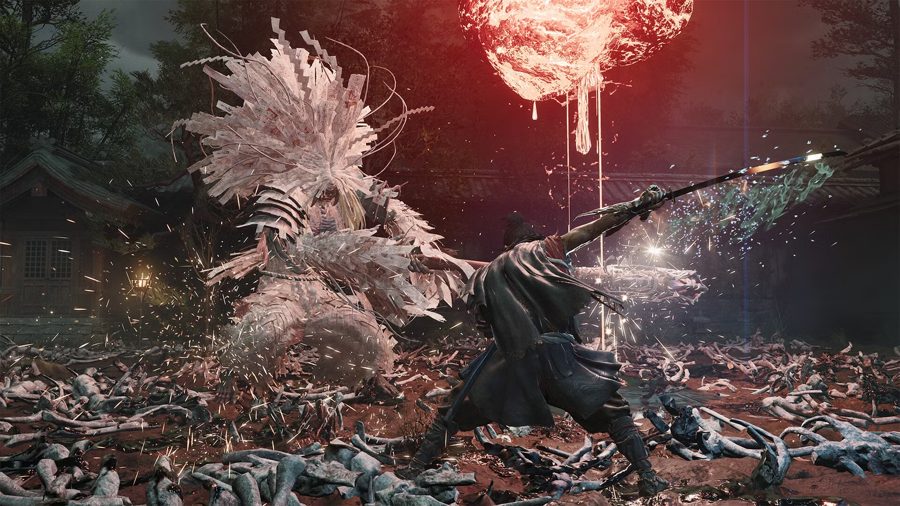
After two decades, Capcom’s Onimusha series has returned with Way of the Sword, a samurai action thriller that both honours the franchise’s roots and attempts to modernise it. The result is a game that delivers electrifying combat and a strong narrative, but struggles with repetition and pacing issues that may test players’ patience.
The story places players in the role of Miyamoto Musashi, the legendary real-life swordsman, during the early years of the Tokugawa shogunate. Musashi arrives in Kyoto to challenge Yoshioka Seijuro, head of the famous Yoshioka school, and makes short work of him. This sparks a chase through the streets as Seijuro’s angry students pursue the young ronin, with Musashi’s exaggerated expressions modelled after the iconic actor Toshiro Mifune. The opening segment continues Onimusha’s tradition of impressive introductions.
Musashi’s luck runs out when he encounters rival swordsman Sasaki Ganryu, and the pair are run through by the demonic Genma, sending them both to Hell. There, a mysterious man in white pulls Musashi from a bloody river, forces an oni gauntlet onto his arm, and sends him back to the world of the living. The gauntlet draws power from the souls of the departed, and Musashi soon meets fellow gauntlet wielder Takamura, a master swordsman who has kept the gate to Hell locked for 800 years, fighting the Genma daily alongside his dancing disciple Okuni.
Takamura enlists Musashi’s help to deal with Kyoto’s growing Genma problem, as the city and its surroundings have become swamped with malice, causing rifts to form and demons to pour through. Musashi is reluctant, as a proud swordsman who respects the art of the duel, and sets out on a quest to remove the gauntlet. Instead, he gets roped into a monster-killing mission, with voice actor Kenichiro Thomson playing the legend as a cheeky bastard who doesn’t see much point in risking his life for grotesque beasts.
Combat and structure
Way of the Sword does away with the fixed camera angles and puzzle-heavy exploration of the original PS2-era Onimusha games, which were essentially Resident Evil’s samurai cousins. Instead, it adopts a more modern action RPG structure, containing shades of Dark Souls, Respawn’s Star Wars Jedi games, and the Yakuza series. Players bounce between linear levels and a compact hub village that fills up with side-quests and collectible dogs between missions. The approachable yet fulfilling combat system, horror-filled wide-linear rendition of Edo period Japan, and the frontman Musashi make for a potent combination.
The game is more or less a total reboot for the series, which debuted in 2001 and largely wrapped up in 2006 after four mainline games. The new structure comes together well enough by the midway point, though it’s not quite as distinct as previous Onimusha games.
The difficulty problem
Late in the game, around the 20-hour mark, players may find themselves growing weary from facing the same few demonic bosses in demanding duels. One stone slate offers the advice: “When going through hell, one must keep going.” The franchise revival has become a typical modern boss gauntlet filled with parries, and even as your power rises through piecemeal RPG progression, it always feels like you’re in the duel of your life. Old foes you thought you had vanquished rear their heads again, leaving you with no choice but to give up or stand and fight.
The game’s powerful swordplay moves in lockstep with thematic takeaways about the nature of strength, making for the rare hard game that actually has something to say about its own difficulty. But by the end of the quest, it can be difficult to feel enriched from all that suffering. The best moments are the ones that play with Musashi as an unwilling hero, and a typical hero’s journey ensues where he has to rediscover his love of fighting.
Verdict
Onimusha: Way of the Sword sees the storied series return to its roots, while adding just enough modern sensibility to entice a fresh audience. Its strong cast, well-realized narrative, and dopamine-inducing combat are all top-notch, though some of the finer details elsewhere are lacking. It is a laser-focused samurai action thriller that is sure to delight, and hopefully marks the beginning of a new era for Onimusha. However, the game can struggle to earn patience in a promising action game bogged down by needless repetition, and sometimes it is a battle worth surviving.