Resonance: A Plague Tale Legacy review — Sophia’s prequel trades stealth for swordplay
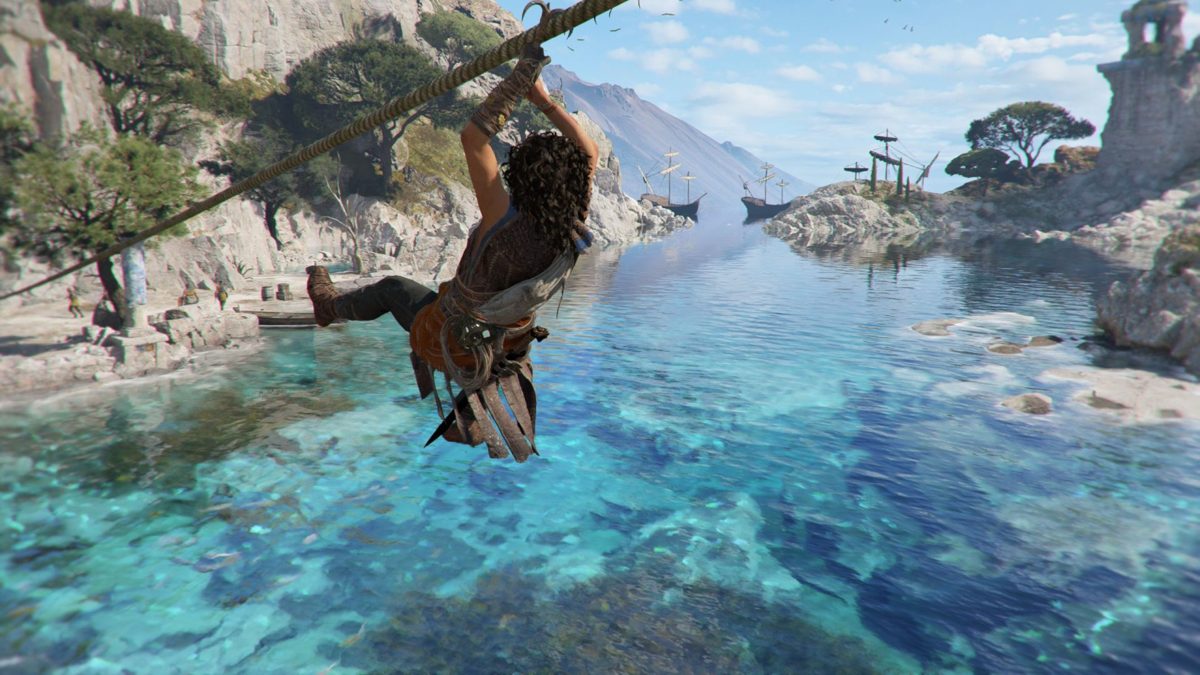
Resonance: A Plague Tale Legacy is out on PC, and it marks a decisive break with the sneaking-and-squeaking formula that defined the earlier games in the series. Instead of another chapter of hide-and-seek with rats, this prequel follows Sophia, the smuggler introduced in the second game, on a Mediterranean treasure hunt built around a new sword combat system. The shift is so complete that the plague, slingshot and alchemy of the parent series barely appear, though stealth does return in the back half of the campaign.
A change of pace and weapon
Where the earlier Plague Tale titles were puzzle-stealth affairs set in a Horrible History version of France during the Hundred Years War, Resonance plays like a third-person action-adventure in the mould of Tomb Raider, but with stabbing instead of shooting. The focus is on melee combat, and the system has been designed with a light touch. Enemies carry a stagger bar that fills the more of their combos you deflect, but you are not forced to master parry timing. Picking up a bottle and hurling it into a soldier’s face works just as well, and there is a meaty kick that staggers foes, drops shields and can shove enemies off ledges if you would rather avoid the finesse of dodge and parry windows entirely.
That kick proved so useful that it was the first upgrade purchased with the resonance points earned from defeating groups of enemies or finding seashells scattered around the environment. The game is linear, but optional side passages and puzzles hand out rewards such as resonance points, new swords and jewellery that boosts critical hit chance or widens the parry window. Sophia visibly wears the jewellery she finds, and by the end of a playthrough she can be so weighed down with bracelets that lifting her arms looks like an achievement in itself.
Puzzles and presentation
The Minoan ruins that form the setting are gated by puzzles that mostly involve manipulating lenses to direct light at the right spot or standing on symbols in sequence. It is fairly routine stuff, with a couple of properly infuriating leaps of logic that will test patience.
On the visual side, the game is powered by Asobo’s in-house engine and looks strong in places. Character models are highly detailed and some environments are genuinely impressive. The trade-off is that the rendering relies on baked lighting with no ray tracing, which produces inconsistent results. The opening area does not look as striking as the second desert region, and while the baked lighting can look superb at times, it can feel dated at others. These are the same visual shortcomings that affect most rasterised games, so they are not unique to this title.
Performance on PC
The PC version runs exceptionally well across a wide range of hardware. Benchmarks at 1080p with maximum settings found the processor to be the limiting factor, with every GPU tested able to deliver a smooth experience, including an Nvidia RTX 2080 Ti when paired with a G-Sync monitor. At 1440p with max settings, most graphics cards held framerates above 60FPS at all times, with only the RTX 2080 Ti and AMD Radeon RX 6900 XT falling short — although the latter can still provide a smooth experience on a FreeSync display.
At native 4K with max settings, the top five GPUs tested all delivered smooth gameplay. The AMD Radeon RX 9070 XT could dip to 58FPS, but a FreeSync monitor smooths over the worst of it. The upshot is that even at native 4K, a top-end card such as an RTX 5090 is not required. It has been a while since a game has run this well at native resolution.
There is no built-in benchmark tool, so testing relies on finding a demanding area early in the campaign. The game supports AMD FSR 3.0 and Nvidia DLSS 4 with multi-frame generation, but there is no Intel XeSS option. Players can adjust texture quality, shadows, volumetric lights, draw distance, ambient occlusion and more. No major stuttering issues were encountered during testing, mouse movement felt responsive, and keyboard-and-mouse on-screen prompts are properly implemented.
Verdict
The review verdict places Resonance between the Tomb Raider reboot games: better than Shadow of the Tomb Raider, not quite as good as Rise of the Tomb Raider. That is a fair summary of a title that succeeds in reinventing the series’ feel while keeping the atmospheric, pulpy Grand Guignol supernatural history that made the earlier games memorable. The combat is satisfying enough to carry the action, the performance is exemplary, and the change of scenery suits Sophia well. Those hoping for more of the same puzzle-stealth formula may be disappointed, but anyone open to a Plague Tale game that fights rather than hides will find plenty to enjoy.