Double Fine’s Tim Schafer on leaving Xbox: “Asha’s not going to shoot my dog”
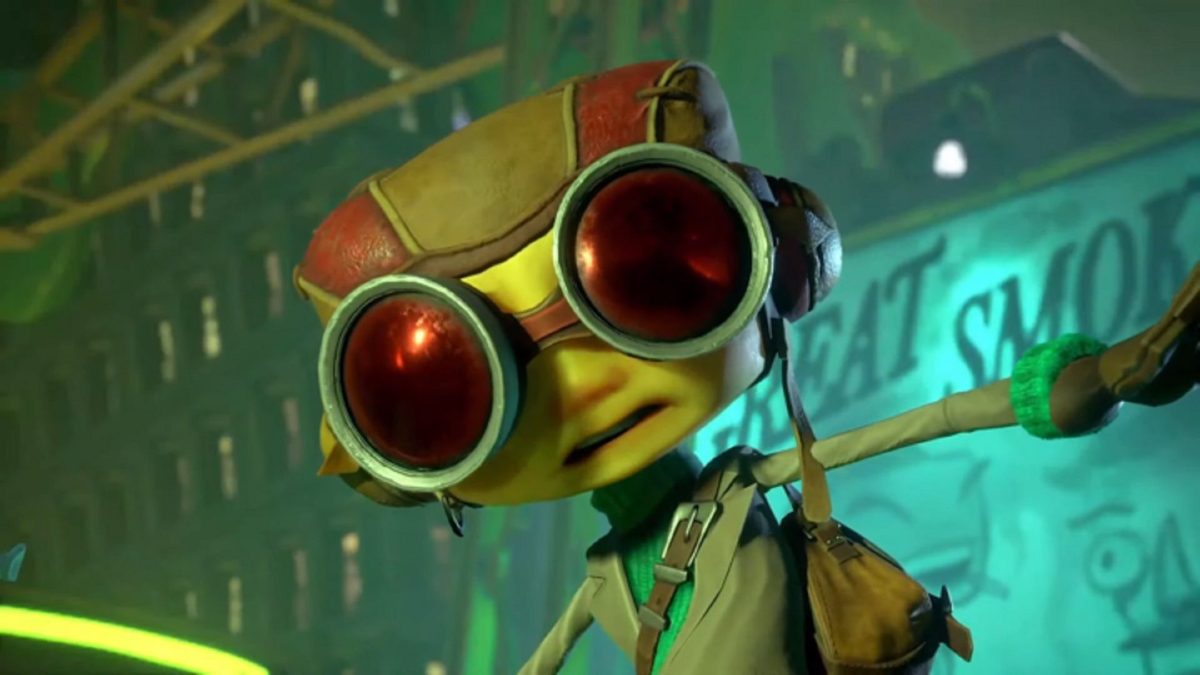
Tim Schafer has spoken candidly about Double Fine’s split from Microsoft, describing the studio’s return to independence as a “creative awakening” while admitting he initially feared the Xbox owner would shut the developer down. In a new interview with Bloomberg, the Psychonauts 2 maker revealed that he had opposed the 2019 acquisition from the start, telling Microsoft at the time: “You guys love shutting down studios.”
Double Fine officially regained its independence on July 6, alongside three other studios including South of Midnight developer Compulsion Games. The move came after a major leadership overhaul at Xbox, in which Asha Sharma replaced Phil Spencer as CEO. Schafer said the relationship had worked while both sides shared a “mutually beneficial mission” of putting games on Game Pass, but that mission changed under the new leadership. He recalled realising something was wrong in small ways: “It’s like – oh, that person didn’t reply to my joke text. That’s kind of how you find out these things. So I knew before I knew.”
The separation was not entirely painless. Double Fine laid off 23 people, and Schafer noted that initial runway funding from Microsoft will not last long. He had been convinced the studio would not survive under Xbox ownership unless it produced a breakout hit on the scale of Minecraft. “I can’t imagine any amount of profitability – unless we had a breakout, Minecraft hit that year – would’ve saved us,” he said.
A change of leadership
Schafer’s doubts about Microsoft dated back to the acquisition offer in 2019. He remembered thinking, “I don’t want to get bought by you,” because of the company’s track record with studio closures. Former Xbox Gaming CEO Phil Spencer was a genuine fan of the studio, however, and current Xbox chief creative officer Matt Booty assured Schafer that Double Fine would be allowed to operate with a degree of self-sufficiency. That arrangement held until this year’s leadership changes.
Despite the abruptness of the divestment – Bloomberg reports that there was still no clarity on Sharma’s plans as late as the beginning of the summer – Schafer has chosen not to dwell on bitterness. He was at PAX West this weekend helping out at Double Fine’s booth, and framed the uncertainty as a moment to rally the team. “Some people said: ‘I’m checking out, this is one too many battles for me.’ But for the rest of us, it’s like a creative awakening,” he said.
He used an unusual metaphor to describe his sense of control over the studio’s fate: “No one puts Double Fine out of business except for me. Asha’s not going to shoot my dog. I’m going to shoot it. But I’m not going to shoot it because it’s going to do great. A lot of people want to walk the dog.” He added that the games industry is full of problems he cannot fix, comparing himself to a captain of a small fishing boat: “Not much I can do about it. Just keep this little boat afloat, keep trying to see if that’s a reef, or is that a bunch of fish? Is that money over there?”
What comes next
Double Fine has already announced its next project, a game called Thank You Bus Driver, revealed on September 4. Players take on the role of a bus driver who wants passengers to say thank you. The studio has also launched a $400,000 Kickstarter for its next game jam, according to the Bloomberg interview.
Schafer acknowledged that the studio’s recent output has not always found a wide audience. Double Fine released the critically acclaimed but poorly selling Keeper in 2025, and the less well-received pottery party game Kiln earlier this year. He admitted that its commitment to unusual experiments is part of what makes the studio distinctive, but also a source of financial pressure. “These games aren’t lucrative enough to make up for how hard they are. They have to also be really fun and rewarding to make,” he said.
He also reflected on the limits of his own business knowledge after decades in the industry: “After all these years, how little I understand about the business just shows how hard it is to know.” His focus now, he said, is on keeping the team together and continuing to make the kind of offbeat games that define the studio. “That’s why I’m focused on keeping my team alive. That’s why we do these creative things all the time. If we stopped doing these wacky creative things, we’d eventually be like, ‘Who cares?’”
The studio’s future is not without risk. The funding from Microsoft is finite, and Double Fine must now stand on its own commercially. But Schafer appears energised by the challenge, describing the renewed independence as a chance to chart a course without corporate constraints. Whether Thank You Bus Driver will deliver the breakout success he once thought necessary remains unconfirmed, but the studio is clearly moving forward on its own terms.