NBA 2K27 labels Nvidia DLSS 5 as 'Neural Rendering' as benchmarks show heavy cost
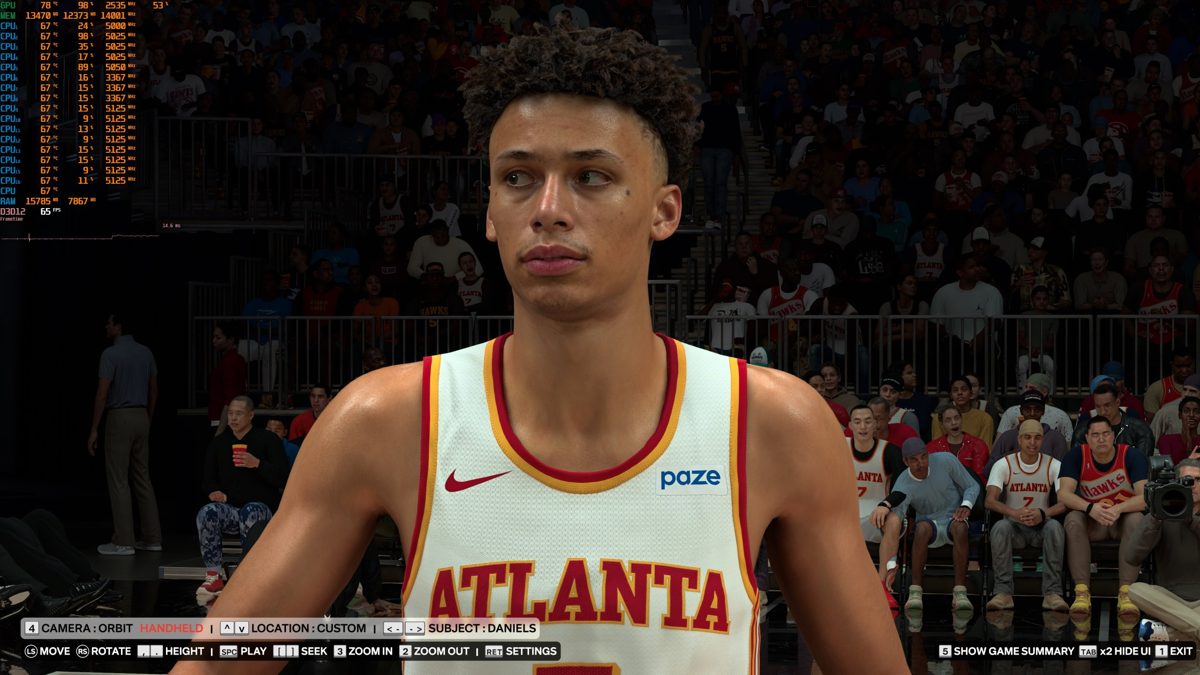
The first official implementation of Nvidia’s DLSS 5 appears in NBA 2K27, but not under the name anyone expected. In the game’s graphics options, the technology is listed simply as “DLSS Neural Rendering,” presented as an on/off toggle that operates independently of traditional upscaling. The label change may look cosmetic, but it could signal a deliberate rebrand of a feature that has generated considerable controversy since it was announced.
Nvidia lifted the embargo for DLSS 5 this week, and NBA 2K27 is the first title to support it. Early testing reveals a technology that dramatically improves image quality while exacting a heavy performance penalty. At 4K with max settings and ray tracing enabled, one reviewer recorded 63FPS with DLSS 5 active on an RTX 5090 system. At 1440p, the same settings produced 108FPS with DLSS 5 on, compared to 176FPS without it. At 1080p, the drop was less severe: 134FPS with DLSS 5 versus 180FPS native, where the CPU became the limiting factor.
The performance cost is not unexpected. Nvidia has previously stated that DLSS 5 would carry a performance hit, and these figures confirm that warning. The good news, according to testing, is that NBA 2K27 runs well at native resolution even without frame generation. The base framerate stays above 60FPS on an RTX 5090 at 4K, meaning players who avoid DLSS 5 will not face a playability crisis.
What the neural rendering label suggests
The naming choice in NBA 2K27 has drawn attention because it sidesteps the DLSS 5 branding entirely. Traditional DLSS upscaling has built a reputation over years of iterative updates, with each new version generally welcomed for modest gains in image quality and performance. Slotting DLSS 5 into that same numbered sequence created confusion, implying that the new AI-driven image alteration was simply the next step in an established line of features. Some gamers interpreted that as a sign that this technology would become mandatory for future DLSS use.
By calling it “Neural Rendering” instead, the toggle appears designed to separate the new technology from the upscaling feature that players have come to trust. The on/off switch can be used independently, or ignored entirely. This framing suggests a cleaner distinction: regular DLSS upscaling continues to receive updates on its own track, while the neural rendering feature exists as a separate, optional addition.
The change was first spotted in leaked DLL files last week, which referred to the feature as “Nvidia DLSSNR.” Its appearance in an official settings menu under the Neural Rendering title gives the first concrete evidence of how Nvidia intends to present the technology to the public.
Visual improvements and a familiar debate
Testing indicates that DLSS 5 delivers a substantial visual upgrade in NBA 2K27, though the effect is less pronounced than what has appeared in unofficial mods. On a PC monitor or television, the difference is immediately visible. The game’s lighting system, long a weak point in recent NBA 2K releases, is notably improved. Without DLSS 5, players look plastic and artificial, and the crowd appears flat and dated. With the feature enabled, the image is more realistic without altering the game’s artistic direction.
The performance trade-off has already sparked familiar criticism. The pattern echoes earlier debates over ray tracing and path tracing, where gamers questioned whether a significant performance hit justified better visuals. The DLSS 5 discussion appears to be following the same trajectory, with some arguing that a 50-60% framerate drop for improved graphics is too steep a price.
It remains to be seen whether the Neural Rendering label will soften that criticism. The branding does at least make clear that this is a separate feature, not a replacement for the upscaling technology that many players now consider essential for smooth performance. Nvidia has not confirmed whether the Neural Rendering name will carry across other games, and the studio behind NBA 2K27 has not commented on the naming decision. What is clear from the first official implementation is that DLSS 5 delivers on its visual promise, and that the cost of that promise is substantial.