Star Wars Zero Company difficulty options include Crisis Missions and Beskar Mode
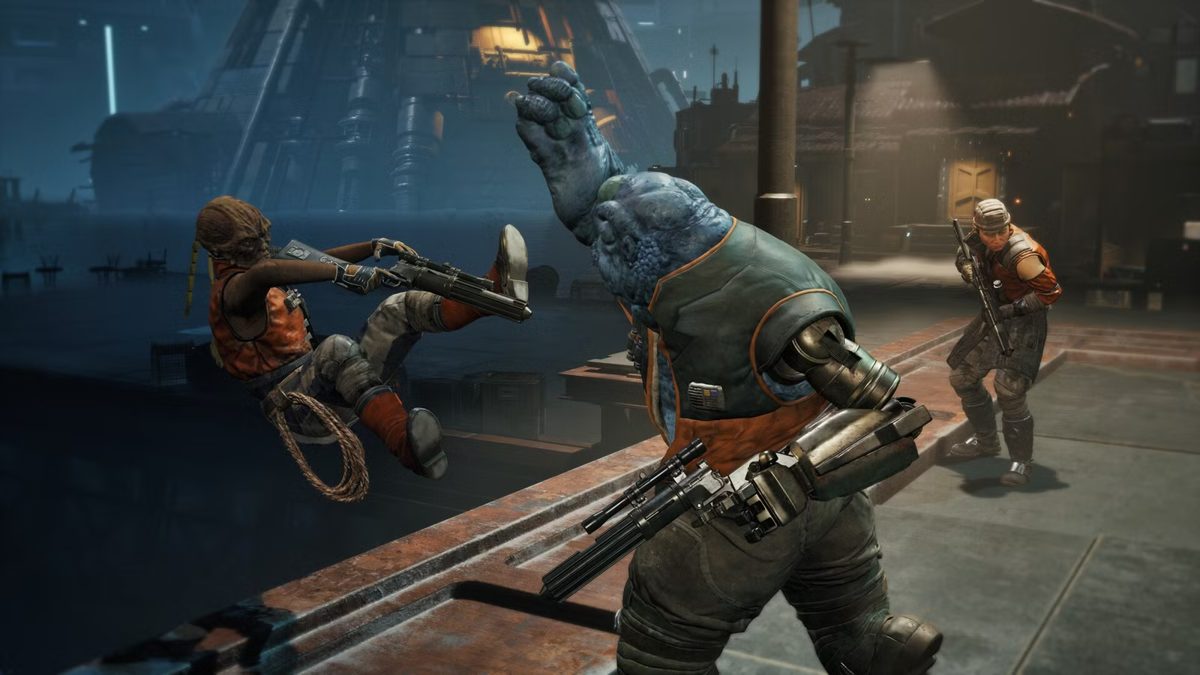
Star Wars Zero Company, the tactical strategy game from Bit Reactor, offers players an unusually layered difficulty system that goes beyond the standard set of presets. At the start of a campaign, players can choose between four main settings — Story, Normal, Hard and Expert — but the game’s most distinctive challenge mechanics only reveal themselves once the campaign is underway.
The four baseline options are straightforward. Story mode is the gentlest setting, with enemies dealing significantly less damage and firing with reduced accuracy, making it suitable for players who want to experience the campaign without friction. Normal is the recommended starting point for newcomers to tactical strategy games, offering standard weapon accuracy and generous blaster ranges that make certain weapon archetypes quite strong. Hard mode raises the stakes considerably: enemies deal more damage and are tougher to bring down, while blaster ranges become far more punishing, forcing careful positioning. The Bacta Tank, an instant heal that removes all injuries from an operator, is disabled in Hard mode, and operator bonds start at a lower level. Expert mode pushes everything further, with enemies hitting extremely hard and proving far more durable — a particular concern when facing Super Battle Droids, Droidekas or the beefier Coil enemies. Weapon ranges are significantly worse, so players must rely heavily on cover, and the Bacta Tank and bond penalties from Hard mode also apply.
Beyond those presets, there is Beskar Mode, which can be toggled on at the start of a new campaign regardless of the chosen difficulty. This is a permadeath mode built around a single save file that constantly overwrites itself. Losing Hawks, the squad’s leader, or a key story character such as Trick ends the entire run.
Crisis missions and enemy evolution
Where Zero Company truly stands apart is in its handling of mid-campaign difficulty scaling. Rather than simply packing maps with more enemies or fielding more powerful units, the game introduces Crisis Missions. Occasionally, when players visit the holotable to select a mission, a red warning appears, signalling that enemy troops are close to learning new combat techniques. These crises are framed narratively: the opposing army has its own research and development efforts, and if left unchecked, enemy units will gain new abilities. A sniping droid might be about to learn an evasion perk, or a unit type could develop a way to bypass some of the player’s defensive cover.
The system gives players agency over how the game gets harder. When a crisis arises, players are shown two separate perks that a unit type could gain and asked to pick one to disrupt. That choice effectively lets players shape their own difficulty curve, deciding which enemy evolutions they will have to deal with as the campaign progresses. The decision is strategic even though it happens off the battlefield: a player building a squad around long-range snipers who rely on movement-disrupting overwatches might prefer to let an enemy empower its melee attacks rather than make itself harder to hit from afar.
This approach makes the difficulty feel less mechanical than in many tactics games. Zero Company naturally gets harder the deeper players go, not because more droids appear but because those droids are receiving better training over time. The enemies feel like a coordinated, living threat that reacts to the player’s counter-attacks, and the crisis system is widely regarded as one of the game’s standout features.
There is also Cautionary Intel, a passive buff that reduces the chance of injuries being sustained by operators during missions. This sits alongside the other difficulty tools as a way for players to fine-tune how punishing the experience feels, particularly when permadeath is in play and the loss of a crucial operator can derail a whole campaign. Between the four difficulty presets, the optional Beskar Mode, the player-driven crisis choices and passive buffs like Cautionary Intel, Zero Company offers one of the more flexible and thoughtful difficulty systems seen in recent strategy games.